الأرقام القياسية في رصد الهلال
في هذه الصفحة:-
- الرصد بالعين المجردة
- الرصد بالتلسكوب
- الرصد نهاراً
- التصوير بالكاميرات العادية
- التصوير بكاميرات CCD
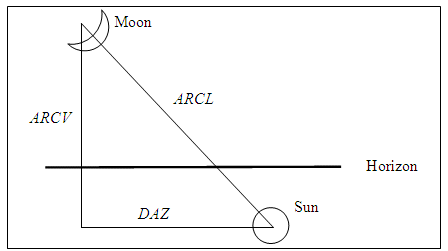
- تعريفات
الرصد بالعين المجردة
نستعرض في هذا القسم الأرقام القياسية العالمية المتعلقة برصد الهلال و التي تمت بالعين المجردة. يضم هذا القسم الرقم القياسي لأصغر هلال ، وأقل مكث، و أخيراً أقل استطالة عن الشمس.
أصغر عمر:
- اسم الراصد: جون بيرس.
- الشهر: شعبان 1410 هجري.
- الموقع: كولنز جاب، ولاية تينيسي ، الولايات المتحدة الامريكية.
- خط الطول: 83.5 غرباً.
- دائرة العرض: 35.6 شمالاً.
- الإرتفاع: 1500 متر عن سطح البحر.
- الإقتران السطحي: 25 شباط (فبراير) 1990 ميلادي في تمام الساعة 08:54 بالتوقيت العالمي.
- الإقتران المركزي: 25 شباط (فبراير) 1990 ميلادي في تمام الساعة 08:22 بالتوقيت العالمي.
- أول رؤية للهلال: 25 شباط (فبراير) 1990 ميلادي في تمام الساعة 23:55 بالتوقيت العالمي.
- عمر الإقتران السطحي عند الرؤية الأولى: 15 ساعة و دقيقة واحدة.
- عمر الإقتران المركزي عند الرؤية الأولى: 15 ساعة و 33 دقيقة.
- المكث: 39 دقيقة.
- الإستطالة (عند أفضل وقت): 7.6 درجة.
- فرق السمت (عند أفضل وقت): 0.6 درجة.
- فرق الأرتفاع: 7.6 درجة.
- المصدر: أوراق بحثية للبروفيسور برادلي شيفر.
أقل مكث:
- اسم الراصد: غير معروف.
- الشهر: ربيع الاول 1411 هجري.
- الموقع: أسدود، فلسطين.
- خط الطول: 34.7 شرقاً.
- دائرة العرض 31.8 شمالاً.
- الإرتفاع: 60 متر عن سطح البحر.
- الإقتران السطحي: 18 أيلول (سبتمبر) 1990 ميلادي في تمام الساعة 23:37 بالتوقيت العالمي.
- الإقتران المركزي: 19 أيلول (سبتمبر) 1990 ميلادي في تمام الساعة 00:46 بالتوقيت العالمي.
- أول رؤية للهلال: 20 أيلول (سبتمبر) 1990ميلادي.
- عمر الإقتران السطحي عند الرؤية الاولى: 40 ساعة و 18 دقيقة.
- عمر الإقتران المركزي عند الرؤية الاولى: 39 ساعة و 9 دقائق.
- المكث: 29 دقيقة.
- الإستطالة (عند أفضل وقت): 19.4 درجة.
- فرق السمت (عند أفضل وقت): 18.4 درجة.
- فرق الأرتفاع: 5.9 درجة.
- المصدر: أوراق بحثية للبروفيسور برادلي شيفر.
أقل استطالة:
- اسم الراصد: جون بيرس.
- الشهر: شعبان 1410 هجري.
- الموقع: كولنز جاب، ولاية تينيسي ، الولايات المتحدة الامريكية.
- خط الطول: 83.5 غرباً.
- دائرة العرض: 35.6 شمالاً.
- الإرتفاع: 1500 متر عن سطح البحر.
- الإقتران السطحي: 25 شباط (فبراير) 1990 ميلادي في تمام الساعة 08:54 بالتوقيت العالمي.
- الإقتران المركزي: 25 شباط (فبراير) 1990 ميلادي في تمام الساعة 08:22 بالتوقيت العالمي.
- أول رؤية للهلال: 25 شباط (فبراير) 1990 ميلادي في تمام الساعة 23:55 بالتوقيت العالمي.
- عمر الإقتران السطحي عند الرؤية الأولى: 15 ساعة و 33 دقيقة.
- عمر الإقتران المركزي عند الرؤية الأولى: 15 ساعة و دقيقة واحدة.
- المكث: 39 دقيقة.
- الإستطالة (عند أفضل وقت): 7.6 درجة.
- فرق السمت (عند أفضل وقت): 0.6 درجة.
- فرق الأرتفاع: 7.6 درجة.
- المصدر: أوراق بحثية للبروفيسور برادلي شيفر.
الرصد بالتلسكوب
فيما يلي تفاصيل الأرقام القياسية العالمية المسجلة في رصد الأهلة باستخدام التلسكوب. يضم هذا القسم الأرقام القياسية لأصغر عمر للإقتران السطحي، أصغر عمر للإقتران المركزي، أقل مكث، وأقل استطالة عن الشمس.
أصغر عمر للاقتران السطحي:
- اسم الراصد: جيم ستام.
- الشهر: جمادى الأولى 1433 هجري.
- أداة الرصد: تلسكوب 8 انش.
- الموقع: توسن، أريزونا، الولايات المتحدة الامريكية.
- خط الطول: 110.9808 غرباً.
- دائرة العرض: 32.4322 شمالاً.
- االإرتفاع: 876 متر عن سطح البحر.
- الإقتران السطحي: 22 آذار / مارس 2012 ميلادي في تمام الساعة 13:31 بالتوقيت العالمي.
- الإقتران المركزي: 22 آذار / مارس 2012 ميلادي في تمام الساعة 14:37 بالتوقيت العالمي.
- آخر رؤية للهلال: 23 آذار / مارس 2012 ميلادي في تمام الساعة 01:54 بالتوقيت العالمي.
- عمر الإقتران السطحي عند الرؤية الأخيرة: 12 ساعة و 23 دقيقة.
- عمر الإقتران المركزي عند الرؤية الأخيرة: 11 ساعة و 17 دقيقة.
- المكث: 24 دقيقة.
- الإستطالة (عند آخر رؤية): 6.0 درجة.
- فرق السمت (عند آخر رؤية): 3.4 درجة.
- فرق الأرتفاع (عند آخر رؤية): 5.0 درجة.
- المصدر: المشروع الأسلامي لرصد الأهلة ICOP.
أصغر عمر للاقتران المركزي:
- اسم الراصد: جيم ستام.
- الشهر: جمادى الأولى 1433 هجري.
- أداة الرصد: تلسكوب 8 انش.
- الموقع: توسن، أريزونا، الولايات المتحدة الامريكية.
- خط الطول: 110.9808 غرباً.
- دائرة العرض: 32.4322 شمالاً.
- االإرتفاع: 876 متر عن سطح البحر.
- الإقتران السطحي: 22 آذار / مارس 2012 ميلادي في تمام الساعة 13:31 بالتوقيت العالمي.
- الإقتران المركزي: 22 آذار / مارس 2012 ميلادي في تمام الساعة 14:37 بالتوقيت العالمي.
- آخر رؤية للهلال: 23 آذار / مارس 2012 ميلادي في تمام الساعة 01:54 بالتوقيت العالمي.
- عمر الإقتران السطحي عند الرؤية الأخيرة: 12 ساعة و 23 دقيقة.
- عمر الإقتران المركزي عند الرؤية الأخيرة: 11 ساعة و 17 دقيقة.
- المكث: 24 دقيقة.
- الإستطالة (عند آخر رؤية): 6.0 درجة.
- فرق السمت (عند آخر رؤية): 3.4 درجة.
- فرق الأرتفاع (عند آخر رؤية): 5.0 درجة.
- المصدر: المشروع الأسلامي لرصد الأهلة ICOP.
أقل مكث:
- اسم الراصد: عباس أحمديان.
- الشهر: رمضان 1428 هجري.
- أداة الرصد: تلسكوب 14 إنش
- الموقع: أصفهان، إيران.
- خط الطول: 52.23 شرقاً.
- دائرة العرض 32.45 شمالاً.
- الإرتفاع: 3350 متر عن سطح البحر.
- الإقتران السطحي: 11 أيلول (سبتمبر) 2007 ميلادي في تمام الساعة 13:50 بالتوقيت العالمي.
- الإقتران المركزي: 11 أيلول (سبتمبر) 2007 ميلادي في تمام الساعة 12:44 بالتوقيت العالمي.
- أول رؤية للهلال: 12 أيلول (سبتمبر) 2007 ميلادي في تمام الساعة 14:49 بالتوقيت العالمي.
- عمر الإقتران السطحي عند أفضل وقت: 25 ساعة و 11 دقيقة.
- عمر الإقتران المركزي عند أفضل وقت: 26 ساعة و 16 دقيقة.
- المكث: 20 دقيقة.
- الإستطالة (عند أفضل وقت): 12.1 درجة.
- فرق السمت (عند أفضل وقت): 11.4 درجة.
- فرق الأرتفاع: 4.1 درجة.
- المصدر: المشروع الأسلامي لرصد الأهلة ICOP.
أقل إستطالة عن الشمس:
- اسم الراصد: جيم ستام.
- الشهر: جمادى الأولى 1433 هجري.
- أداة الرصد: تلسكوب 8 انش.
- الموقع: توسن، أريزونا، الولايات المتحدة الامريكية.
- خط الطول: 110.9808 غرباً.
- دائرة العرض: 32.4322 شمالاً.
- االإرتفاع: 876 متر عن سطح البحر.
- الإقتران السطحي: 22 آذار / مارس 2012 ميلادي في تمام الساعة 13:31 بالتوقيت العالمي.
- الإقتران المركزي: 22 آذار / مارس 2012 ميلادي في تمام الساعة 14:37 بالتوقيت العالمي.
- آخر رؤية للهلال: 23 آذار / مارس 2012 ميلادي في تمام الساعة 01:54 بالتوقيت العالمي.
- عمر الإقتران السطحي عند الرؤية الأخيرة: 12 ساعة و 23 دقيقة.
- عمر الإقتران المركزي عند الرؤية الأخيرة: 11 ساعة و 17 دقيقة.
- المكث: 24 دقيقة.
- الإستطالة (عند آخر رؤية): 6.0 درجة.
- فرق السمت (عند آخر رؤية): 3.4 درجة.
- فرق الأرتفاع (عند آخر رؤية): 5.0 درجة.
- المصدر: المشروع الأسلامي لرصد الأهلة ICOP.
الرصد نهاراً
فيما يلي الرقم القياسي المسجل عالمياً لرصد الهلال نهاراً باستخدام التلسكوب، مع عدم تمكن الراصد من رؤية الهلال بعد مغيب الشمس بالرغم من صفاء السماء.
- اسم الراصد: جيم ستام.
- الشهر: شوال 1428 هجري.
- الموقع: توسن، أريزونا، الولايات المتحدة الامريكية.
- خط الطول: 110.96 غرباً.
- دائرة العرض: 32.42 شمالاً.
- االإرتفاع: 842 متر عن سطح البحر.
- الإقتران السطحي: 11 تشرين الأول (أكتوبر) 2007 ميلادي في تمام الساعة 05:01 بالتوقيت العالمي.
- الإقتران المركزي: 11 تشرين الأول (أكتوبر) 2007 ميلادي في تمام الساعة 05:23 بالتوقيت العالمي (14:40 بالتوقيت المحلي).
- أول رؤية للهلال: 11 تشرين الأول (أكتوبر) 2007 ميلادي في تمام الساعة 21:40 بالتوقيت العالمي (14:40 بالتوقيت المحلي).
- عمر الإقتران السطحي عند الرؤية الأولى: 16 ساعة و 17 دقيقة.
- عمر الإقتران المركزي عند الرؤية الأولى: 16 ساعة و 39 دقيقة.
- المكث: 5 دقائق.
- الإستطالة (عند الرؤية الأولى): 8.8 درجة.
- فرق السمت (عند الرؤية الأولى): 10.2 درجة.
- فرق الأرتفاع: 2.7 درجة.
- ارتفاع القمر (عند الرؤية الأولى): 34.1 درجة.
- ارتفاع الشمس (عند الرؤية الأولى): 36.8 درجة
- ملاحظة: لم يتمكن الراصد من رؤية الهلال بعد مغيب الشمس حتى باستخدام التلسكوب. الرؤية كانت نهاراً فقط.
- المصدر: المشروع الأسلامي لرصد الأهلة ICOP.
التصوير بالكاميرات العادية
فيما يلي تفاصيل و صور للأرصاد القياسية التي تم التقاطها بواسطة التصوير بالكاميرات العادية. الأرصاد القياسية هي أصغر عمر، أقل مكث، و أقل استطالة عن الشمس.
أصغر عمر:
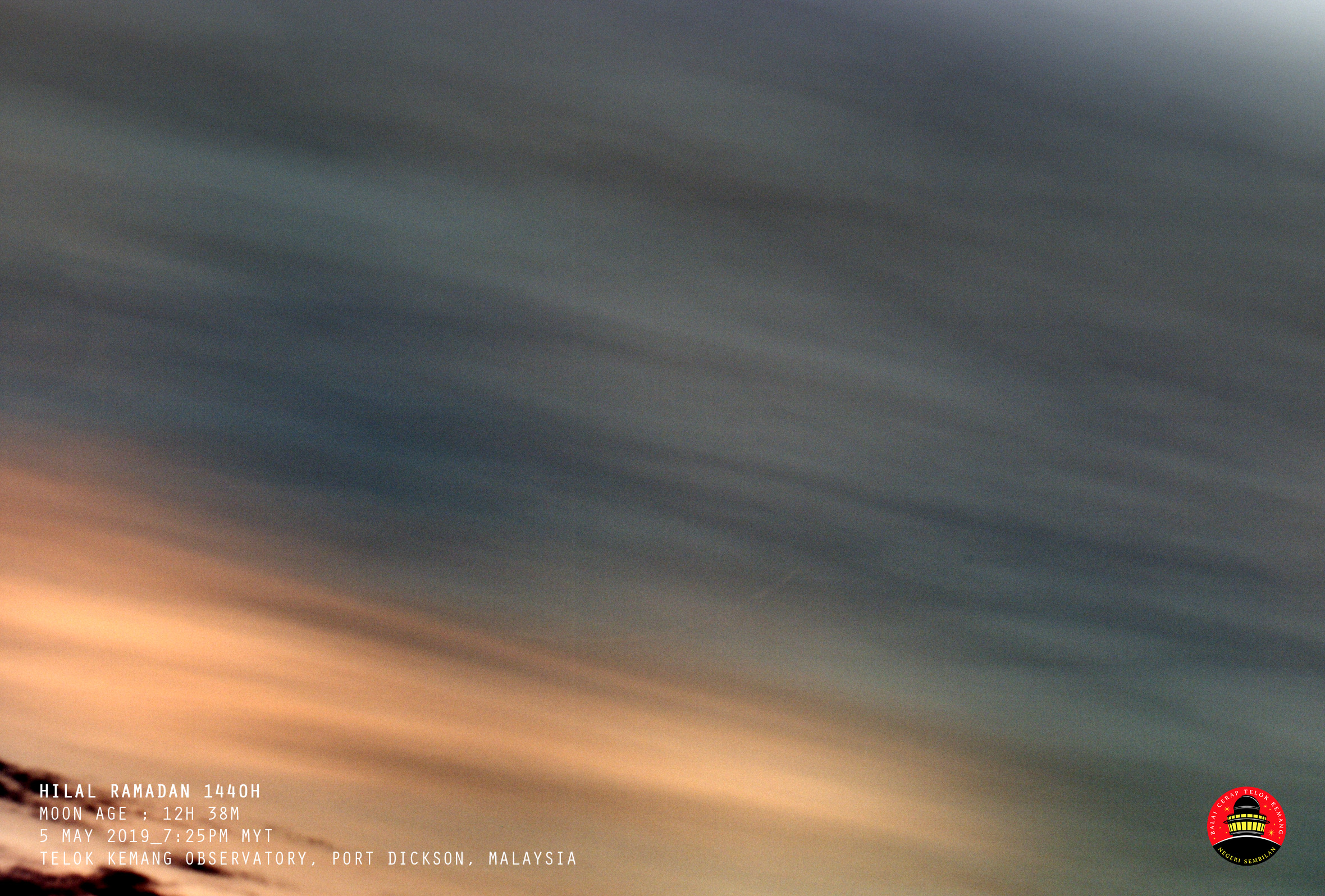
- اسم الراصد: مزمر مزلان، مرصد تيلوك كيمانج الفلكي.
- الشهر: رمضان 1440 هـ.
- الموقع: مدينة بورت ديكسون، ولاية نيجيري سيمبيلان، ماليزيا.
- خط الطول: 101:51 شرقا.
- دائرة العرض: 02:27 شمالا.
- الإرتفاع: 15 مترا عن سطح البحر.
- أداة الرصد: تلسكوب كاسر بقطر 6 إنش، بعد بؤري 1100 ملم.
- الكاميرا: Sony A7s (Modified).
- يوم التصوير: 05 مايو 2019م.
- وقت التصوير: 19:25 (غرينتش + 8).
- عدد الصور: صورة واحدة.
- الإقتران السطحي: 05 مايو 2019م، الساعة 05:16 توقيت محلي (غرينتش + 8).
- الإقتران المركزي: 05 مايو 2019م، الساعة 06:45 توقيت محلي (غرينتش + 8).
- عمر الإقتران السطحي عند التقاط الصورة: 14 ساعة و 09 دقائق.
- عمر الإقتران المركزي عند التقاط الصورة: 12 ساعة و 40 دقيقة.
- المكث: 26 دقيقة.
- الإستطالة (وقت الصورة): 6.8 درجة.
- فرق السمت (وقت الصورة): سالب 2.7 درجة.
- فرق الأرتفاع (وقت الصورة): 6.3 درجة.
أقل مكث:
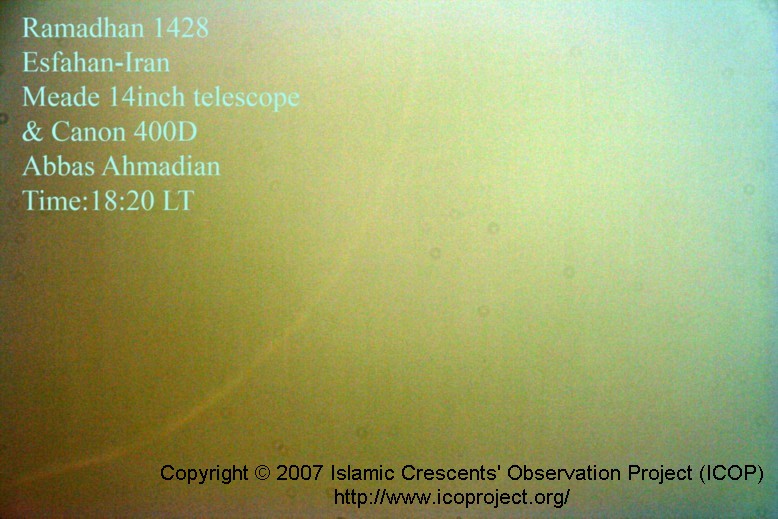
- اسم الراصد: عباس أحمديان.
- الشهر: رمضان 1428 هجري.
- أداة الرصد: تلسكوب 14 إنش
- الموقع: أصفهان، إيران.
- خط الطول: 52.23 شرقاً.
- دائرة العرض 32.45 شمالاً.
- الإرتفاع: 3350 متر عن سطح البحر.
- الإقتران السطحي: 11 أيلول (سبتمبر) 2007 ميلادي في تمام الساعة 13:50 بالتوقيت العالمي.
- الإقتران المركزي: 11 أيلول (سبتمبر) 2007 ميلادي في تمام الساعة 12:44 بالتوقيت العالمي.
- أول رؤية للهلال: 12 أيلول (سبتمبر) 2007 ميلادي في تمام الساعة 14:50 بالتوقيت العالمي.
- عمر الإقتران السطحي عند أفضل وقت: 25 ساعة و 11 دقيقة.
- عمر الإقتران المركزي عند أفضل وقت: 26 ساعة و 16 دقيقة.
- المكث: 20 دقيقة.
- الإستطالة (عند أفضل وقت): 12.1 درجة.
- فرق السمت (عند أفضل وقت): 11.4 درجة.
- فرق الأرتفاع: 4.1 درجة.
- المصدر: المشروع الأسلامي لرصد الأهلة ICOP.
أقل استطالة عن الشمس:
- اسم الراصد: مزمر مزلان، مرصد تيلوك كيمانج الفلكي.
- الشهر: رمضان 1440 هـ.
- الموقع: مدينة بورت ديكسون، ولاية نيجيري سيمبيلان، ماليزيا.
- خط الطول: 101:51 شرقا.
- دائرة العرض: 02:27 شمالا.
- الإرتفاع: 15 مترا عن سطح البحر.
- أداة الرصد: تلسكوب كاسر بقطر 6 إنش، بعد بؤري 1100 ملم.
- الكاميرا: Sony A7s (Modified).
- يوم التصوير: 05 مايو 2019م.
- وقت التصوير: 19:25 (غرينتش + 8).
- عدد الصور: صورة واحدة.
- الإقتران السطحي: 05 مايو 2019م، الساعة 05:16 توقيت محلي (غرينتش + 8).
- الإقتران المركزي: 05 مايو 2019م، الساعة 06:45 توقيت محلي (غرينتش + 8).
- عمر الإقتران السطحي عند التقاط الصورة: 14 ساعة و 09 دقائق.
- عمر الإقتران المركزي عند التقاط الصورة: 12 ساعة و 40 دقيقة.
- المكث: 26 دقيقة.
- الإستطالة (وقت الصورة): 6.8 درجة.
- فرق السمت (وقت الصورة): سالب 2.7 درجة.
- فرق الأرتفاع (وقت الصورة): 6.3 درجة.
التصوير بكاميرات CCD
فيما يلي تفاصيل و صور لأهلة تم تصويرها بواسطة كاميرا CCD وتلسكوب ثم قام الراصد بمعالجة الصور بهدف تحسين النتائج. جميع هذه الصور التقطت نهاراً.
أصغر عمر للاقتران المركزي:
- اسم الراصد: تياري ليغول.
- الشهر: جمادى الأولى 1431 هـ.
- الموقع: مونتفوكون، فرنسا.
- خط الطول: 01:34:30 شرقا.
- دائرة العرض: 44:41:52 شمالاً.
- الإرتفاع: 300 متر عن سطح البحر.
- أداة الرصد: تلسكوب تكاهاشي بقطر 4.2 إنش FSQ-106ED مع Focal Recuer (القطر 106ملم، بعد بؤري 400ملم)، محمل على قاعدة لوزمندي تيتان
- الكاميرا: Lumenera Skynyx L2-2 monochrome video camera 1616x1212 pixels of 4.4 microns.
- الفلتر: Low-pass infrared filter 850nm in luminance.
- عدد الصور: 500 صورة.
- يوم التصوير: 14 نيسان/إبريل 2010م.
- وقت التصوير: 14:29 (غرينتش + 2).
- الإقتران السطحي: 14 نيسان/إبريل 2010م، الساعة 13:22 بالتوقيت العالمي.
- الإقتران المركزي: 14 نيسان/إبريل 2010م، الساعة 12:29 بالتوقيت العالمي.
- وقت الصورة: 14 نيسان/إبريل 2010م، الساعة 12:29 بالتوقيت العالمي.
- عمر الإقتران السطحي عند التقاط الصورة: سالب صفر ساعة و 53 دقيقة.
- عمر الإقتران المركزي عند التقاط الصورة: صفر ساعة و صفر دقيقة.
- الإستطالة السطحية (وقت الصورة): 4.554 درجة.

يرجى الضغط على الصورة للتكبير
- اسم الراصد: مارتن إليسياسر.
- الشهر: جمادى الأولى 1429 هـ.
- الموقع: ميونخ، ألمانيا.
- خط الطول: 11:36:25 شرقا.
- دائرة العرض: 48:07:18 شمالاً.
- الإرتفاع: 550 متر عن سطح البحر.
- أداة الرصد: Williams FLT110, at 770mm focal length, with MAM50 mount.
- الكاميرا: DMK41AF02.AS
- الفلتر: Visual/ir filters in the telescope, transmission starts at 680nm.
- عدد الصور: حوالي 300 صورة.
- يوم التصوير: 05 آيار/مايو 2008م.
- وقت التصوير: 15:03 (غرينتش + 2).
- الإقتران السطحي: 05 آيار/مايو 2008م، الساعة 13:07 بالتوقيت العالمي.
- الإقتران المركزي: 05 آيار/مايو 2008م، الساعة 12:18 بالتوقيت العالمي.
- وقت الصورة: 05 آيار/مايو 2008م، الساعة 13:03 بالتوقيت العالمي.
- عمر الإقتران السطحي عند التقاط الصورة: سالب صفر ساعة و 04 دقائق.
- عمر الإقتران المركزي عند التقاط الصورة: صفر ساعة و 45 دقيقة.
- الإستطالة السطحية (وقت الصورة): 4.585 درجة.
يرجى الضغط على الصورة للتكبير
- اسم الراصد: فينسنت جاكوس.
- الشهر: محرم 1433 هـ.
- الموقع: بريل سور رويا، فرنسا.
- خط الطول: 07:30 شرقا.
- دائرة العرض: 43:56 شمالاً.
- الإرتفاع: 500 متر عن سطح البحر.
- أداة الرصد: L80/600 ED / eq6 Goto mount.
- الكاميرا: DMK 21
- الفلتر: 950nm filter + red 0.5.
- عدد الصور: غير معروف.
- يوم التصوير: 25 تشرين ثاني / نوفمبر 2011م.
- وقت التصوير: 11:49 (غرينتش + 1).
- الإقتران السطحي: 25 تشرين ثاني / نوفمبر 2011م، الساعة 04:44 بالتوقيت العالمي.
- الإقتران المركزي: 25 تشرين ثاني / نوفمبر 2011م، الساعة 06:10 بالتوقيت العالمي.
- وقت الصورة: 25 تشرين ثاني / نوفمبر 2011م، الساعة 10:49 بالتوقيت العالمي.
- عمر الإقتران السطحي عند التقاط الصورة: 06 ساعات و 05 دقائق.
- عمر الإقتران المركزي عند التقاط الصورة: 04 ساعات و 39 دقيقة.
- الإستطالة السطحية (وقت الصورة): 3.42 درجة.
- يرجى الضغط هنا للاطلاع على صور أخرى لهذا الرصد.
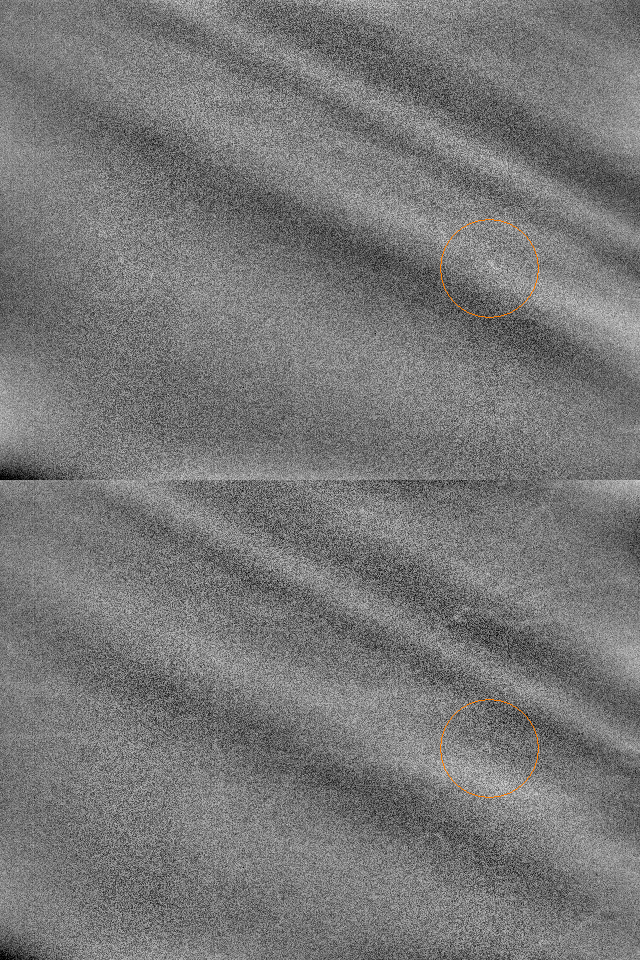
يرجى الضغط على الصورة للتكبير
أصغر استطالة في العالم الإسلامي (ربيع الأول 1441 هـ):
- اسم الراصد: محمد عودة وأسامة غنام وأنس محمود.
- الشهر: ربيع الأول 1441 هـ
- الموقع: جبل حفيت، مدينة العين، الإمارات.
- خط الطول: 55:46 شرقا.
- دائرة العرض: 24:05 شمالاً.
- الإرتفاع: 940 متر عن سطح البحر.
- أداة الرصد: Explore Scientific 127mm f/7.5 ED APO Refractor Telescope, 952mm FL.
- الكاميرا: Lumenera, Lm165M, 1.4 Megapixel, 2/3" Sensor, 1392 x 1040 Pixels, 6.45µm square pixels.
- الفلتر: 807 nm Filter.
- عدد الصور: 300 صورة.
- يوم التصوير: 28 أكتوبر 2019م.
- وقت التصوير: 11:55 (غرينتش + 4).
- الإقتران السطحي: 28 أكتوبر 2019م، الساعة 01:54 بالتوقيت العالمي.
- الإقتران المركزي: 28 أكتوبر 2019م، الساعة 03:38 بالتوقيت العالمي.
- وقت الصورة: 28 أكتوبر 2019م، الساعة 07:55 بالتوقيت العالمي.
- عمر الإقتران السطحي عند التقاط الصورة: 06 ساعات ودقيقة واحدة.
- عمر الإقتران المركزي عند التقاط الصورة: 04 ساعات و17 دقيقة.
- الإستطالة السطحية (وقت الصورة): 4.85 درجة.
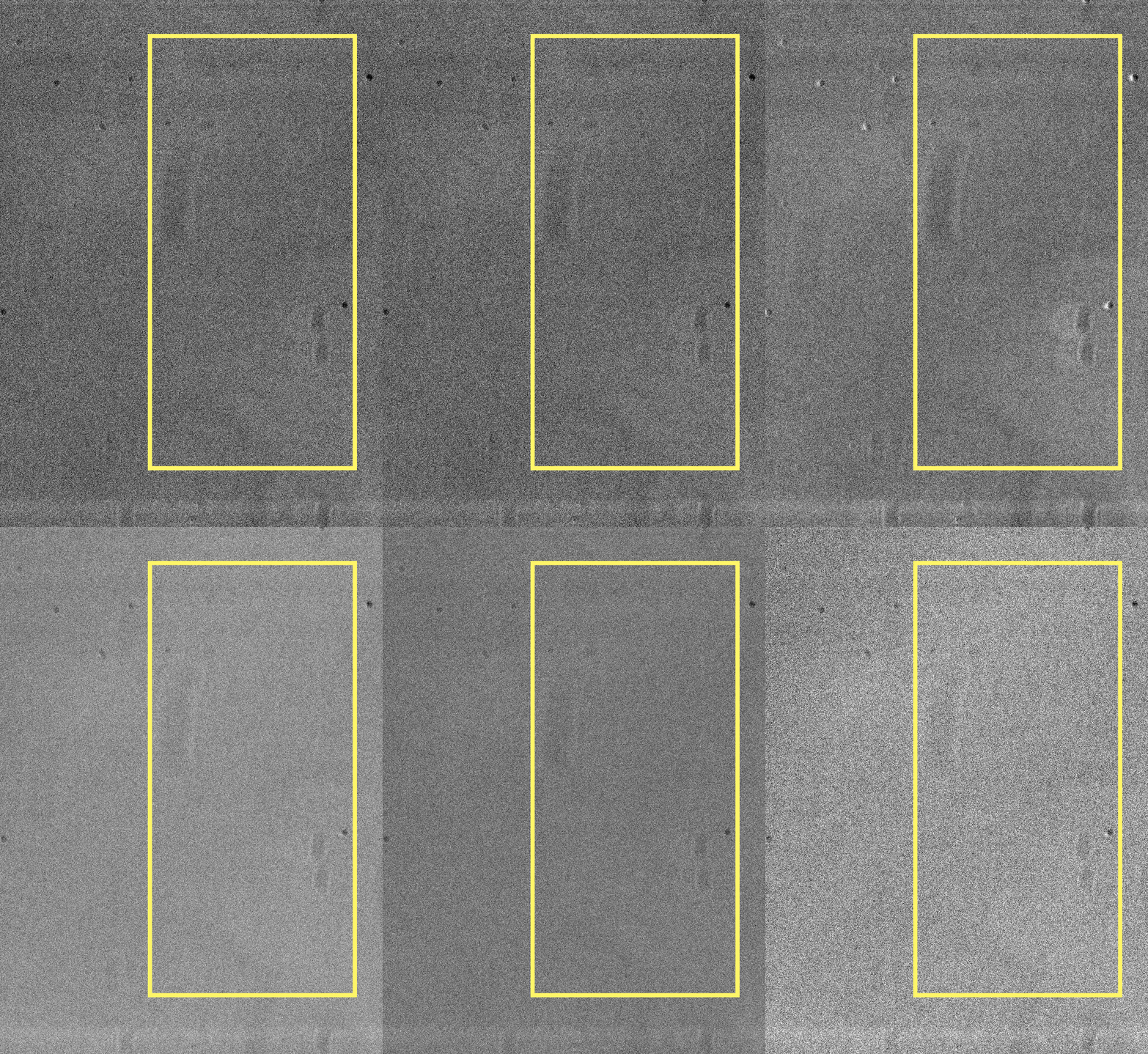
يرجى الضغط على الصورة للتكبير. صورة تبين حركة بسيطة للهلال داخل حقل الرؤية أثناء التصوير.
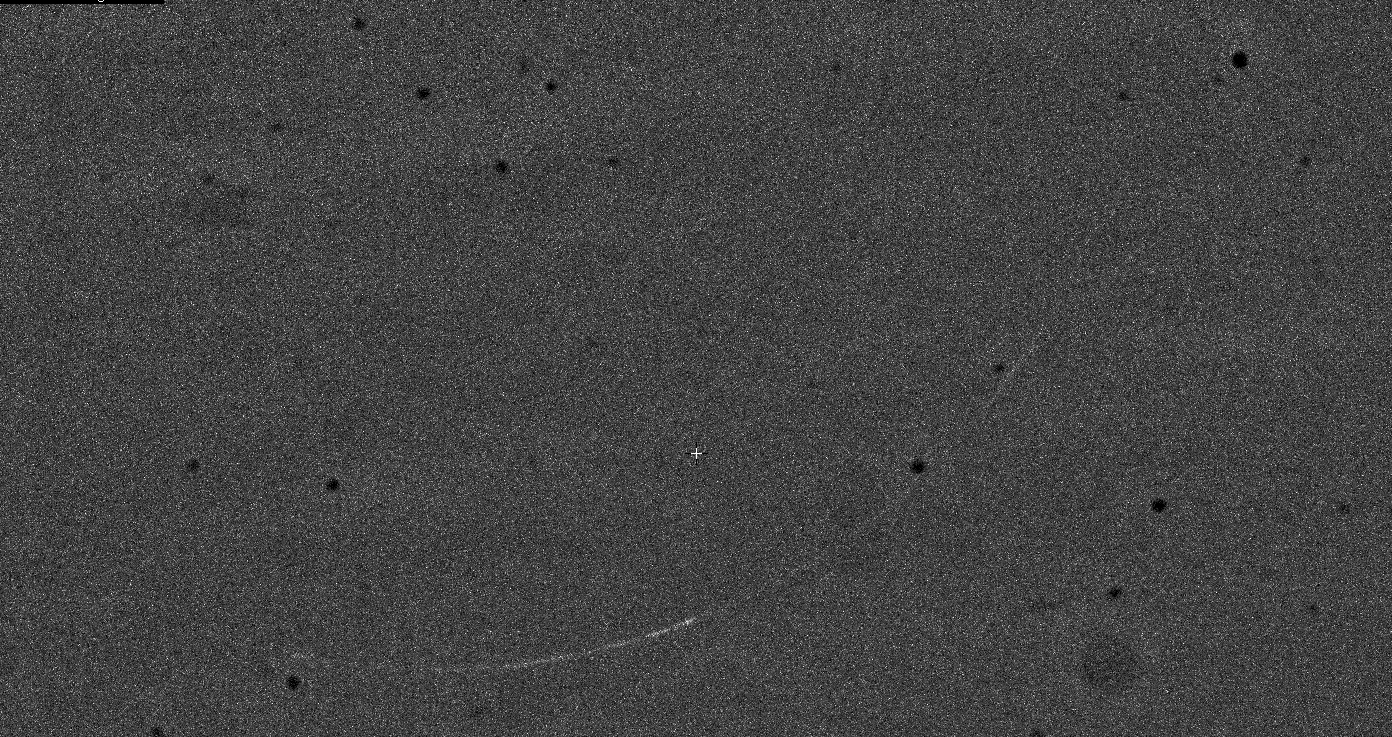
يرجى الضغط على الصورة للتكبير. صورة أوضح للهلال قبيل الغروب.
تعريفات
- عمر الإقتران السطحي: الوقت ما بين حدوث الاقتران السطحي و وقت الحدث الذي نتحدث عنه.
- عمر الإقتران المركزي: الوقت ما بين حدوث الاقتران المركزي و وقت الحدث الذي نتحدث عنه.
- المكث: الفترة ما بين غروب الشمس و غروب القمر، او ما بين شروق القمر و شروق الشمس (هلال آخر الشهر)
- الاستطالة (قوس النور): بعد مركز القمر عن مركز الشمس بالدرجات كما يرى من الأرض.
- فرق السمت (دلتا السمت): الفرق بين السمت السطحي للقمر و الشمس.
- فرق الارتفاع (قوس الرؤية): الفرق بين الارتفاع السطحي للقمر و الشمس.
- ارتفاع القمر: ارتفاع القمر السطحي غير المصحح للانكسار الضوئي.
- ارتفاع الشمس: ارتفاع الشمس السطحي غير المصحح للانكسار الضوئي.