Visibility of Thul Kea'dah Crescent 1430 AH
On this page:-
When to Observe Thul Kea'dah Waxing (NEW) Crescent ?
The geocentric conjunction (Geocentric New Moon) will occur Inshalla on (Sunday 18 October 2009) at 05:33 UT.
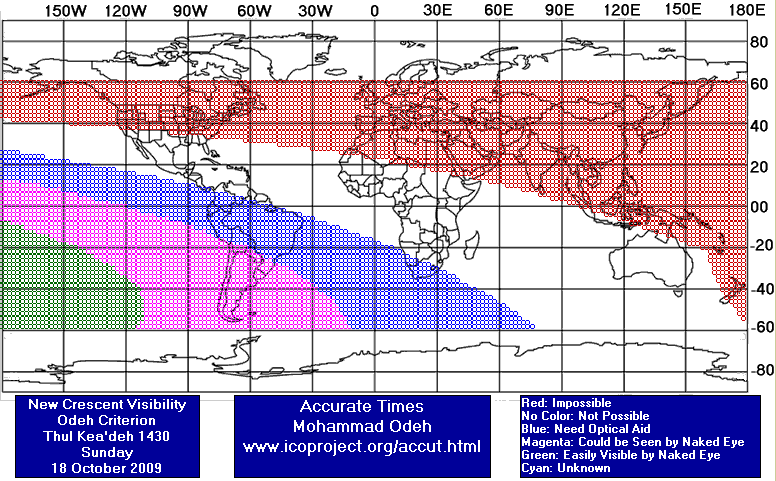
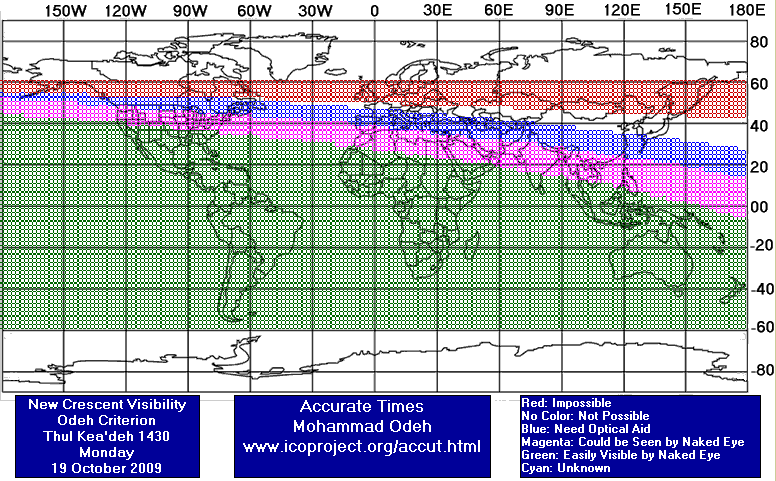
Sighting the new crescent on (Sunday 18 October 2009) and (Monday 19 October 2009) is shown in the below graphs using the program Accurate Times by Mohammad Odeh according to Odeh criterion. Where:-
- It is impossible to see the crescent from the areas located under the red color. Because either the Moon on this day sets before the Sunset and/or the topocentric conjunction occurs after the Sunset.
- The crescent is expected to be seen by optical aid only from the areas located under the blue color.
- The crescent is expected to be seen by optical aid from the areas located under the magenta color. In these areas the crescent could be seen by naked eye if the atmospheric conditions are superb and the observer is experienced.
- The crescent is expected to be easily visible by naked eye from the areas located under the green color.
- The crescent can not be seen from uncolored areas, even though the Moon sets in these locations after the Sunset and the topocentric conjunction occurs before the Sunset, but the Moon is not sufficiently illuminated in order to be seen as crescent even by optical aid.
- Kindly notice that the below graph shows the possibility of seeing the crescent from areas between 60 degrees north of Equator down to 60 degrees south of Equator.
Sunday 18 October 2009
Monday 19 October 2009
According to the Universal Hejric Calendar (UHC), which is based on the calculated crescent visibility, the start of this month in the Eastern Region will be on Tuesday 20 October 2009 and in the Western Region will be on Monday 19 October 2009.
- Results of seeing the crescent, and the first day of the month in different countries will be added here Inshalla as we receive the reports from ICOP's members. If you wish to be a member in ICOP, or to know more about it, kindly click here.
Thul Kea'dah Waxing (NEW) Crescent Observation Results
18 October 2009
Australia
1. Not Seen: ICOP member Mr. Afroz Ali from Sydney City in NSW State mentioned that the sky was clear, the atmospheric condition was clear, the crescent was not seen by naked eye, the crescent was not seen by binocular, the crescent was not sought by telescope, the crescent was not sought by CCD Imaging
Lebanon
1. Not Seen: ICOP member Dr. Ahmad Raad from Baalbeck City in Bekaa State mentioned that the sky was clear, the atmospheric condition was clear, the crescent was not seen by naked eye, the crescent was not seen by binocular, the crescent was not sought by telescope, the crescent was not sought by CCD Imaging
Nigeria
1. Not Seen: ICOP member Mr. Usman Dukku from Bauchi City in Bauchi State mentioned that the sky was partly cloudy, the atmospheric condition was hazy, the crescent was not seen by naked eye, the crescent was not seen by binocular, the crescent was not sought by telescope, the crescent was not sought by CCD Imaging
Mr. Usman Dukku said: "In spite of the clouds four of us attempted sighting the crescent, here in Bauchi, but we did not see it."
2. Not Seen: ICOP member Mr. Qamardeen Yasin Muhammad from LAGOS City in LAGOS State mentioned that the sky was clear, the atmospheric condition was clear, the crescent was not seen by naked eye, the crescent was not seen by binocular, the crescent was not sought by telescope, the crescent was not sought by CCD Imaging
Mr. Qamardeen Yasin Muhammad said: "Clear sky, but new hilal is not visble and when I contact Ilorin,Abuja,Via Kano and Lagos it was reported that new hilal is not visible"
Saudi Arabia
1. Not Seen: ICOP member Mr. Bander Albotehy from Riyadh City in Riyadh State mentioned that the sky was clear, the atmospheric condition was clear, the crescent was not sought by naked eye, the crescent was not sought by binocular, the crescent was not sought by telescope, the crescent was not sought by CCD Imaging
Mr. Bander Albotehy said: "لم تتم محاولة رصد الهلال في التاسع والعشرين من شوال"
Senegal
1. Not Seen: ICOP member Mr. Ibrahima Thierno Lo from Dakar City in Senegal State mentioned that the sky was partly cloudy, the atmospheric condition was hazy, the crescent was not seen by naked eye, the crescent was not seen by binocular, the crescent was not sought by telescope, the crescent was not sought by CCD Imaging
Mr. Ibrahima Thierno Lo said: "Sighting the crescent by naked eyes was tried in Dakar Senegal at october 18, 2008, but it was not seen. "
United Kingdom
1. Not Seen: ICOP member Mr. Qamar Uddin from York City in North Yorkshire State mentioned that the sky was totally cloudy, the atmospheric condition was very hazy, the crescent was not seen by naked eye, the crescent was not seen by binocular, the crescent was not sought by telescope, the crescent was not sought by CCD Imaging
Mr. Qamar Uddin said: "This is a combined report from ICOUK members from different parts of UK. On Sunday 29 Shawwal 1430 AH (18 October 2009) many of us have tried to sight the crescent moon (Hilal) of Dhul Qaidah 1430 AH after sunset, but there were negative sighting report received as most places were cloudy. We also have received negative sighting reports from East of UK (including South Africa).
Therefore, the UK Ulama (including Wifaq/Batley) have decided that the month of Shawwal 1430 AH will have 30 days and the month of Dhul Qaidah 1430 AH will start from Tuesday 20 October 2009, Insha-Allah.
"
2. Not Seen: ICOP member Mr. Suliman Gani from London City in London State mentioned that the sky was partly cloudy, the atmospheric condition was hazy, the crescent was not seen by naked eye, the crescent was not seen by binocular, the crescent was not sought by telescope, the crescent was not sought by CCD Imaging
Mr. Suliman Gani said: "After Magrib Salaat at the Norbury Islamic Academy an attempt was made to sight the hilal with naked eye.
The 8 of us could not sight the hilal. Also there was a tall building obstructing our view."
19 October 2009
Algeria
1. Seen: ICOP member Eng. Kacem Bankih from Benisguen City in Ghardaïa State mentioned that the sky was partly cloudy, the atmospheric condition was clear, the crescent was not seen by naked eye, the crescent was seen by binocular, the crescent was not sought by telescope, the crescent was not sought by CCD Imaging
Eng. Kacem Bankih said: "The Dul Kida 1430 crescent was seen from Mrkiche station only by binoculars (20x60). The western horizon was partly cloudy and hazy. Four persons have tried to observe this crescent by naked eyes but it wasn't seen."
Germany
1. Not Seen: ICOP member Mr. Gerhard Ahmad Kaufmann from Moerlenbach City in Hessen State mentioned that the sky was totally cloudy, the atmospheric condition was hazy, the crescent was not sought by naked eye, the crescent was not sought by binocular, the crescent was not sought by telescope, the crescent was not sought by CCD Imaging
2. Not Seen: ICOP member Eng. Martin Elsaesser from Munich City in Bavaria State mentioned that the sky was partly cloudy, the atmospheric condition was hazy, the crescent was not seen by naked eye, the crescent was not seen by binocular, the crescent was not seen by telescope, the crescent was not sought by CCD Imaging
Eng. Martin Elsaesser said: "Clouds and haze prevented us from seeing the crescent on monday. The crescent was very low in the sky. Lag time was just 6 minutes."
Lebanon
1. Not Seen: ICOP member Dr. Ahmad Raad from Beirut City in Beirut State mentioned that the sky was partly cloudy, the atmospheric condition was hazy, the crescent was not seen by naked eye, the crescent was not seen by binocular, the crescent was not sought by telescope, the crescent was not sought by CCD Imaging
Malaysia
1. Seen: ICOP member Mr. Kassim Bahali from Melaka City in Melaka State mentioned that the sky was partly cloudy, the atmospheric condition was hazy, the crescent was seen by naked eye, the crescent was seen by binocular, the crescent was seen by telescope, the crescent was not sought by CCD Imaging
Mr. Kassim Bahali said: "The hilal was seen at Al-Khawarizmi observatory. The hilal was first seen by Meade LX200" at 19:00, after 15 minutes the hilal was seen by naked eye."
Nigeria
1. Seen by others: ICOP member Mr. Abdul-Rasaq Abdul-Azeez Ishola from Ikorodu City in Lagos State mentioned that the sky was partly cloudy, the atmospheric condition was hazy, the crescent was not seen by naked eye, the crescent was not seen by binocular, the crescent was not sought by telescope, the crescent was not sought by CCD Imaging
Mr. Abdul-Rasaq Abdul-Azeez Ishola said: "I was unable to to see the Dhul-Qidah crescent due to cloudness on 19-10-09 but my Colleque Imam Monsue Majolagbe and brothers were able to sight the crescent in a different locations."
2. Seen by others: ICOP member Mr. Usman Dukku from Bauchi City in Bauchi State mentioned that the sky was totally cloudy, the atmospheric condition was clear, the crescent was not seen by naked eye, the crescent was not seen by binocular, the crescent was not sought by telescope, the crescent was not sought by CCD Imaging
Mr. Usman Dukku said: "We searched for the moon today as well but we did not see it here in Bauchi. However our colleagues in Dukku and Gombe, in the neighbouring Gombe State, reported seeing it with naked eyes."
Oman
1. Seen: ICOP member Prof. Mohammed Al-Bussaidi from Sohar City in Sohar State mentioned that the sky was clear, the atmospheric condition was hazy, the crescent was not seen by naked eye, the crescent was not seen by binocular, the crescent was seen by telescope, the crescent was not sought by CCD Imaging
Prof. Mohammed Al-Bussaidi said: "The crescent was sighted by using a telescope. The western sky was hazy, as such we could not see the crescent through a finderscope despite being attached to the main telescope."
Pakistan
1. Not Seen: ICOP member Mr. Alam Sultan from Karachi City in Sindh State mentioned that the sky was clear, the atmospheric condition was hazy, the crescent was not seen by naked eye, the crescent was not seen by binocular, the crescent was not sought by telescope, the crescent was not sought by CCD Imaging
Mr. Alam Sultan said: "On my request, Today (Monday, 19 October 2009 = 29 Shawwal 1430 in Pakistan) nearly 300 persons (Members of the moon-sighting committees of our institute "JAMIA-TUR-RASHEED" + My friends + their companions) tried to sight the moon all over Pakistan at nearly 50 places but the moon could not be sighted. Generally the weather was clear. Chairman of central official moon-sighting committee of Pakistan "Mufti Munee-bur-Rahman" also informed me on my mobile phone that he has officially announced that Tuesday 20 october 2009 is the 30th shawwal and 1st Zul-qadah 1430 will fall on Wednesday 21 October 2009.
Note: After some days, inshaallah, a detailed report of this observation will be available at www.esnips.com/web/moonnewsofjamiaturrasheed
"
Spain
1. Not Seen: ICOP member Mr. Abdel Karim As-Saraqusti from Zaragoza City in Aragon State mentioned that the sky was totally cloudy, the atmospheric condition was hazy, the crescent was not sought by naked eye, the crescent was not sought by binocular, the crescent was not sought by telescope, the crescent was not sought by CCD Imaging
Mr. Abdel Karim As-Saraqusti said: "It was clear this morning but in the afternoon the sky become very cloudy, I tried to see the moon but I have no chance to see it. However tomorrow here will be 1st of DhulQadah."
United Kingdom
1. Not Seen: ICOP member Mr. Muhammad Arshad Dar from Bolton City in Lancashire State mentioned that the sky was totally cloudy, the atmospheric condition was very hazy, the crescent was not sought by naked eye, the crescent was not sought by binocular, the crescent was not sought by telescope, the crescent was not sought by CCD Imaging
The OFFICIAL First Day in Different Countries
20 October 2009
1. Australia
2. Lebanon
3. Malaysia
4. Nigeria
5. Oman
6. Saudi Arabia
7. Senegal
8. Spain
9. United Kingdom
21 October 2009
1. Pakistan
When to Observe Shawwal Waning (OLD) Crescent ?
The geocentric conjunction (Geocentric New Moon) will occur Inshalla on (Sunday 18 October 2009) at 05:33 UT.
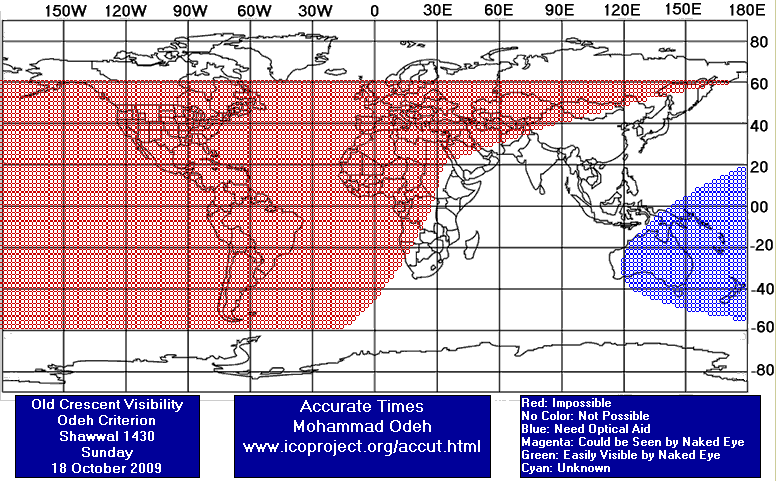
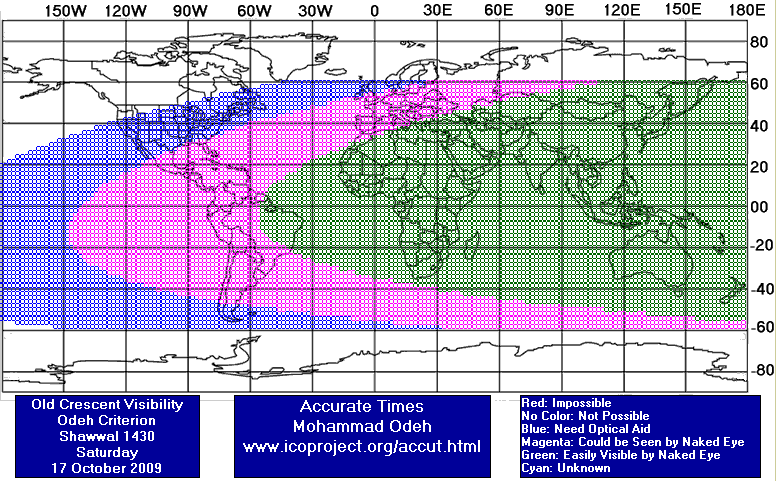
Sighting the OLD crescent on (Sunday 18 October 2009) and on (Saturday 17 October 2009) is shown in the below graphs using the program Accurate Times by Mohammad Odeh according to Odeh criterion. Where:-
- It is impossible to see the OLD crescent from the areas located under the red color. Because either the Moon on this day rises after the Sunrise and/or the topocentric conjunction occurs before the Sunrise.
- The crescent is expected to be seen by optical aid only from the areas located under the blue color.
- The crescent is expected to be seen by optical aid from the areas located under the magenta color.. In these areas the crescent could be seen by naked eye if the atmospheric conditions are superb and the observer is experienced.
- The crescent is expected to be easily visible by naked eye from the areas located under the green color.
- The crescent can not be seen from uncolored areas, even though the Moon rises in these locations before the Sunrise and the topocentric conjunction occurs after the Sunrise, but the Moon is not sufficiently illuminated in order to be seen as crescent even by optical aid.
- Kindly notice that the below graph shows the possibility of seeing the crescent from areas between 60 degrees north of Equator down to 60 degrees south of Equator.
Sunday 18 October 2009
Saturday 17 October 2009
Shawwal Waning (OLD) Crescent Observation Results
17 October 2009
Nigeria
1. Seen: ICOP member Mr. Usman Dukku from Dukku City in Gombe State mentioned that the sky was partly cloudy, the atmospheric condition was clear, the crescent was seen by naked eye, the crescent was seen by binocular, the crescent was not sought by telescope, the crescent was not sought by CCD Imaging
Spain
1. Seen: ICOP member Mr. Abdel Karim As-Saraqusti from Zaragoza City in Aragon State mentioned that the sky was clear, the atmospheric condition was clear, the crescent was seen by naked eye, the crescent was seen by binocular, the crescent was not sought by telescope, the crescent was not sought by CCD Imaging
Mr. Abdel Karim As-Saraqusti said: "Assalamu alaykum, at the time this is the most difficult crescent sighting, I see the crescent just after Fajr prayer, I look at the horizon from the window of my bedroom, and I see something that looks as a crescent, so I take my binoculars to confirm it, and it's the thinest crescent that I seen ever. I tried to take some photos but my lens have at best 55mm focal length, I'm sorry for the bad quality but it's the crescent."
United Kingdom
1. Not Seen: ICOP member Mr. Qamar Uddin from York City in North Yorkshire State mentioned that the sky was totally cloudy, the atmospheric condition was very hazy, the crescent was not sought by naked eye, the crescent was not sought by binocular, the crescent was not sought by telescope, the crescent was not sought by CCD Imaging
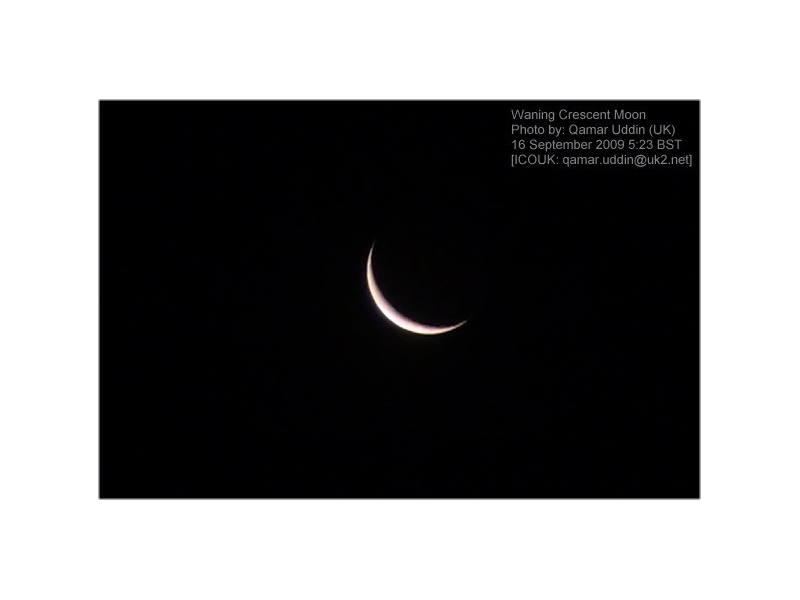
Mr. Qamar Uddin said: "The eastern horizon was totally cloudy for last few days. There was no waning (old) crescent see this months. However, as this the first report on the new ICOP website, I am including last months (16 September 2009) photo for test purposes!"
United States
1. Not Seen: ICOP member Mr. Jim Stamm from Tucson City in AZ State mentioned that the sky was clear, the atmospheric condition was clear, the crescent was not sought by naked eye, the crescent was not sought by binocular, the crescent was not seen by telescope, the crescent was not sought by CCD Imaging